Relationship between an audio-based Respiratory Health Monitoring system and pig PRRS vaccination status
By M. Liang, Y. Yu, G. Wu, J. Huo, C. Ren, C. Alonso
A 1-year retrospective observational study analyzing the impact of PRRS vaccination on pig respiratory health using automated audio monitoring (ReHS).



Highlights
KEYWORDS
PRRS, Respiratory Health, Vaccination, Monitoring
COUNTRY
China
YEAR
2023
Summary
Background & Objectives
Respiratory disease outbreaks continue to be a major challenge for pig producers, being Porcine Reproductive and Respiratory Syndrome virus, the main pathogen impacting antibiotic use, welfare, productivity, and profitability. SoundTalks® is an audio-based technology that continuously registers and quantifies respiratory health symptoms using the Respiratory Health Status metric, or ReHS. This metric has proven to have a strong relationship with batch mortality and ADG (Average Daily Gain). In China, a diversity of swine production companies, in different regions with different strategies for controlling PRRS have been remotely monitoring their growing population with this sound-technology. Therefore, the objectives of this study were to describe the respiratory health status of all these farms and to measure the impact in ReHS of the different vaccine interventions used for PRRS control.
Materials & Methods
All Chinese growing farms sound-monitored from 1st Sep of 2022 to 30th Sep of 23 were considered as a candidate for the study. Inclusion criteria included a minimum of 3 monitors per farm, a known PRRS status and vaccine use by the farm, as well as a minimum of 60 days of continue data. Farms were categorized into 3 groups. (1. PRRS-negative; 2. PRRS-positive-vaccinated; 3. PRRS-positive-non-vaccinated) and differences in daily ReHS values were calculated and analyzed for the study.
Results
A total of 88 farms fulfilled the inclusion criteria averaging a ReHS of 70.06 during the timing of the study (Figure 1). The average ReHS score of the group 1 was the highest followed by group 2 and 3 (Table 1). After the one-factor analysis, we find that there is a big significance between group 2 and 3 (α = 0.1; p = 0.039) and there is a significance between 1 and 3 (α = 0.1; p = 0.089) (Table 2).
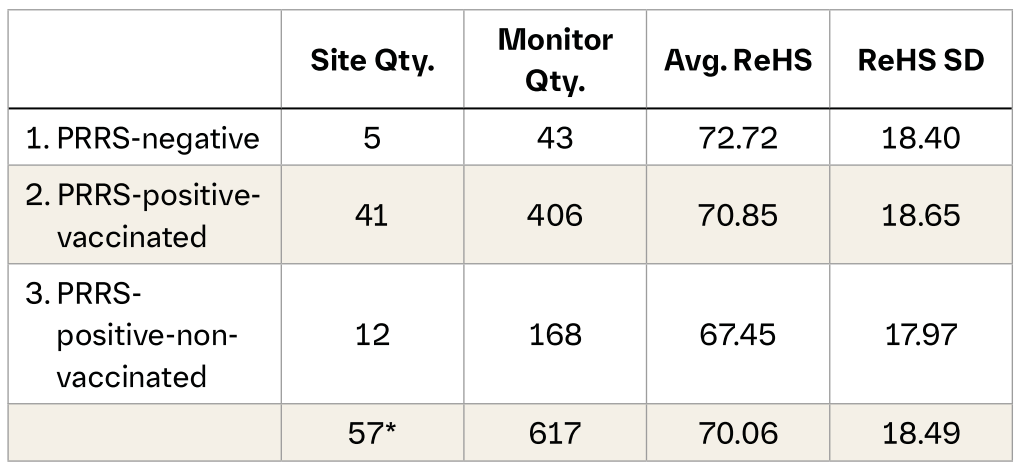
Table 1. The average Respiratory Health Status (ReHS) value in the farms with 3 categories of PRRS vaccine immunization. (* There’s one special site (Shandong HB Huizhong). The first batch (with 12 monitors working) is PRRS-negative. The 2nd batch (with the other 10 monitors working) is PRRS-positive-vaccinated. That's why the total site number is 57 (not 58).)
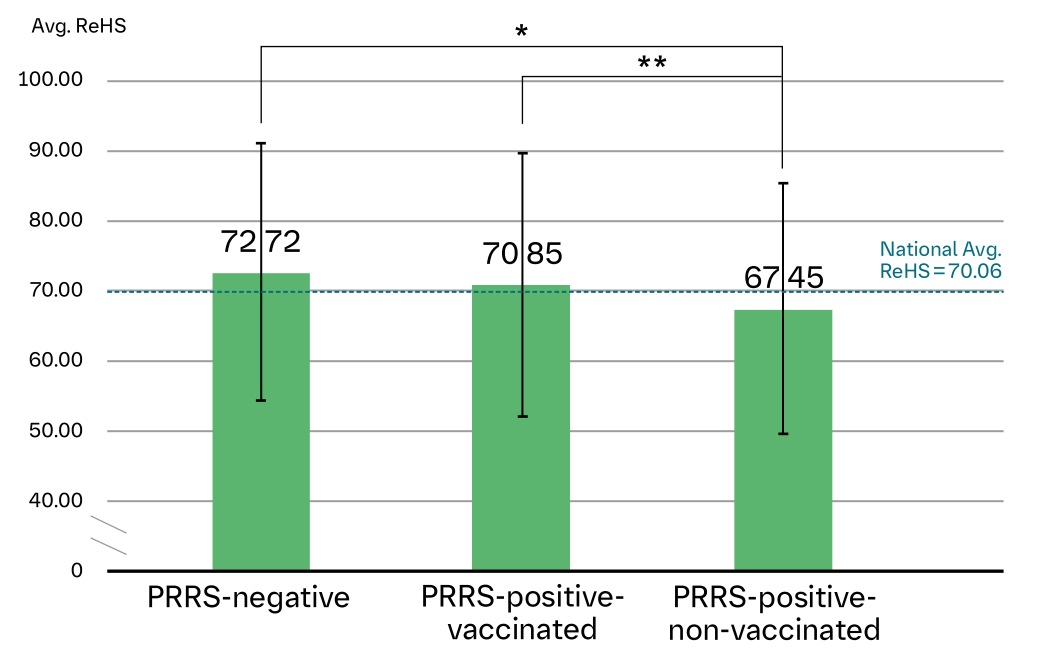
Figure 1. Average ReHS values across PRRS-negative, PRRS-positive-vaccinated, and PRRS-positive-non-vaccinated farms.
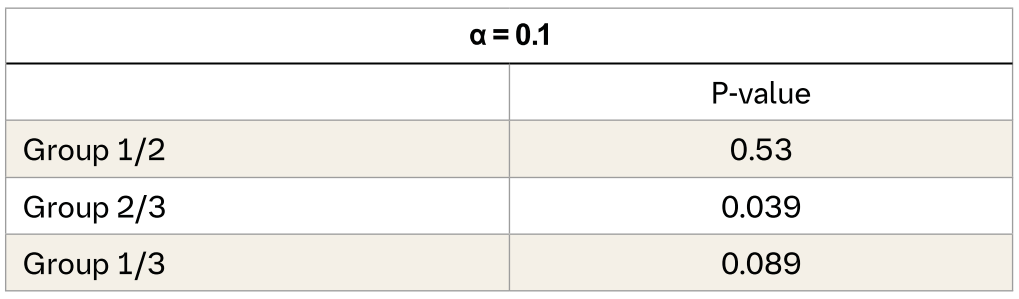
Table 2. The 3*2 ANOVA analysis within the three groups.
Discussion & Conclusion
The result of this analysis is consistent with the common understanding that strategies, such as pig vaccination for PRRS, can significantly improve respiratory health. Respiratory health management is a comprehensive challenge for producers. To achieve better production performance, PRRSV prevention and control strategies should be implemented and monitored. SoundTalks® ReHS score can provide pig farmers with a quantifiable and measurable method to manage respiratory health for growing pigs and at-risk breeding herds. This potential can be better realized as technology adoption broadens.
Reference
See how SoundTalks can help
you detect and act smarter
Whether you're a farm manager, health and welfare partner or researcher, we're here to help you detect earlier and act smarter.
CONTACT